Electrical Issues in a Home or Office
Electrical issues often start small — a flickering light here, a tripping breaker there. The trouble is, minor warning signs can quickly escalate into serious hazards if left unaddressed. Knowing what to look for is the first step to keeping your home or office safe and fully functional.
Flickering or dimming lights
If your lights flicker when you switch on a large appliance, the cause is usually a shared circuit that's struggling to handle the load. Occasional dimming is relatively harmless, but persistent flickering may point to loose wiring or a failing connection somewhere in the system. Both scenarios warrant a closer look from a qualified electrician.
Frequently tripping circuit breakers
Circuit breakers are designed to trip when a circuit becomes overloaded — that's exactly what they're supposed to do. The problem arises when a breaker trips repeatedly. This typically means a circuit is carrying more current than it was built to handle, or that there's a fault somewhere along the line. Resetting the breaker is only a temporary fix; the root cause needs to be identified and resolved.
Burning smells or discoloured outlets
A burning smell near an outlet or switch plate is a red flag that should never be ignored. It often signals overheating, arcing, or a wiring fault — all of which can lead to electrical fires. Similarly, scorch marks or discolouration around a socket indicate that something has already overheated. Switch off the affected circuit and contact an electrician straight away.
Outlets that don't work
Dead outlets are one of the more common electrical complaints in both homes and offices. They're often caused by a tripped GFCI (ground fault circuit interrupter) outlet elsewhere on the same circuit, a blown fuse, or a loose wire behind the faceplate. While a tripped GFCI is straightforward to reset, a loose or damaged connection requires professional attention.
Old or outdated wiring
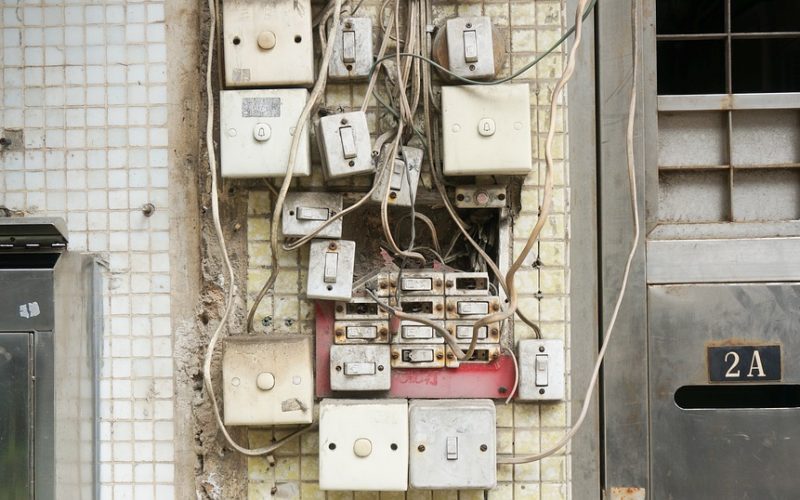
Properties built before the 1970s may still have outdated wiring that no longer meets modern safety standards. Aluminium wiring, knob-and-tube systems, and two-pronged outlets are all signs that an upgrade may be overdue. Older wiring wasn't designed for today's electrical demands, making it more susceptible to overheating and faults. A full inspection by a licensed electrician can assess the current state of the system and recommend any necessary work.
When to call a professional
Some electrical tasks — like replacing a light fitting or resetting a tripped breaker — can be handled without specialist help. Anything beyond that should be left to a qualified electrician. Attempting to repair wiring, replace a consumer unit, or investigate a persistent fault without the proper training is not only dangerous but may also breach building regulations. If you're ever in doubt, the safest course of action is always to seek professional advice.